
Uncategorized
Cross-Chain Swaps in Rabby Wallet: What Transaction Simulation Can—and Cannot—Tell You

A common misconception is that a cross-chain swap is simply a larger version of an ordinary token swap. It is not. A swap on one network changes an asset through a single execution environment; a cross-chain transaction must coordinate assets, liquidity, messaging, fees, and settlement across more than one environment. That extra coordination creates additional failure points, even when the interface looks familiar.
For US-based DeFi users, this distinction matters because a wallet interface can make a complicated route appear deceptively simple. A quoted amount is not the same thing as a guaranteed outcome, and a transaction simulation is not a crystal ball. Simulation can expose many contract-level problems before signing, but it cannot eliminate bridge risk, changing market conditions, malicious approvals, or every failure that may occur after a message leaves the originating chain.
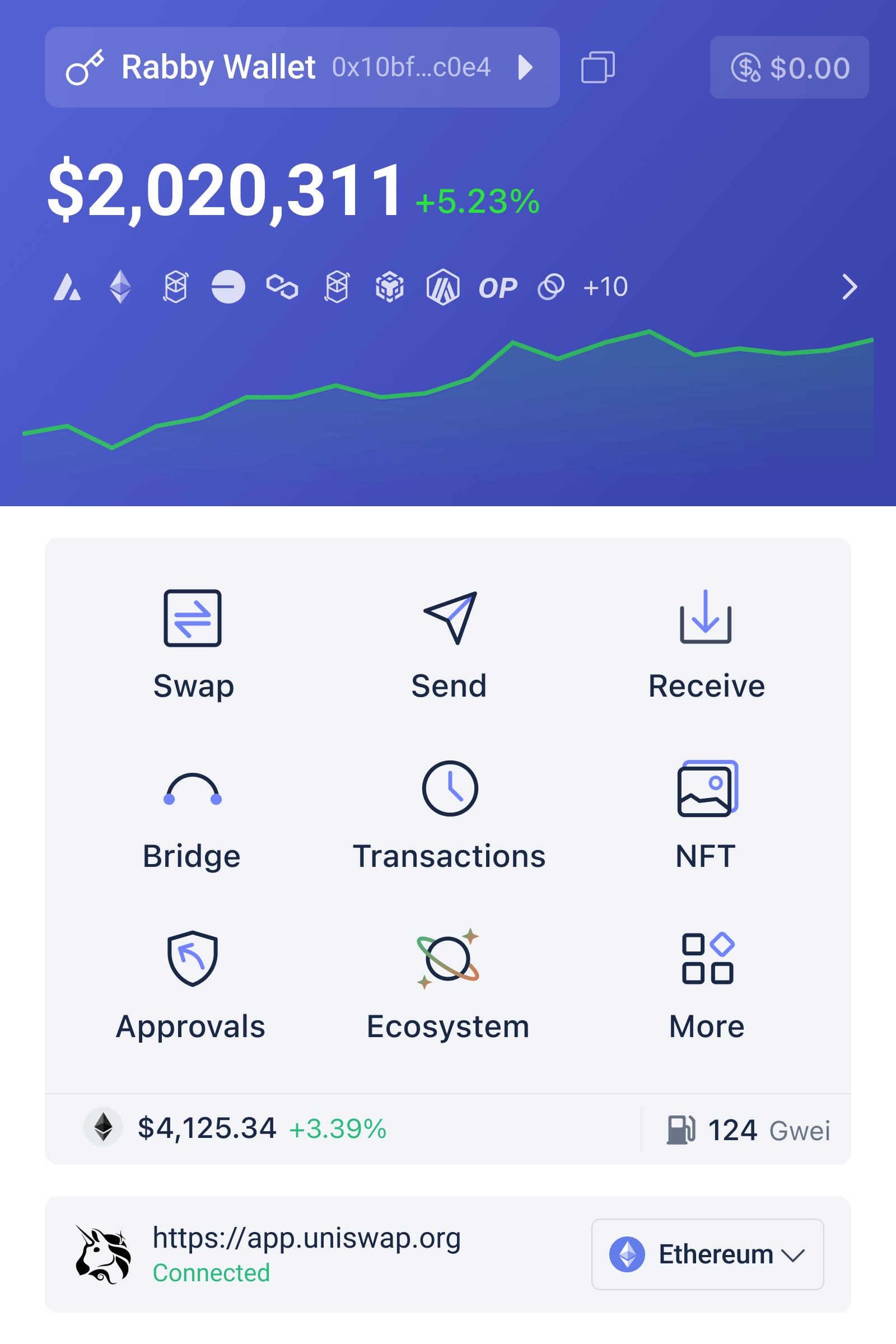
Why cross-chain swaps are different from ordinary swaps
In a conventional decentralized exchange transaction, a user generally sends an instruction to a smart contract on one blockchain. The contract checks the supplied parameters, interacts with liquidity pools, and returns the resulting asset if the transaction satisfies its conditions. The transaction may still fail because of slippage, insufficient gas, or an expired deadline, but the relevant state is largely contained within one network.
A cross-chain swap adds a second operational layer. One route may involve a liquidity provider on the source chain, a bridge or messaging system, and a liquidity provider on the destination chain. In other designs, the user’s asset is locked, burned, or escrowed on one chain while a corresponding representation is released or minted elsewhere. These models have different trust assumptions. The visible swap is therefore only the front end of a multi-stage process.
The practical consequence is that “success” has several meanings. The source transaction can be confirmed while the destination transfer is still pending. A bridge message can be delivered while a final contract call fails. A route can complete but produce less value than expected because the destination market moved during the interval. Users should ask not only whether a transaction was mined, but also where the assets are held, which actor controls the next step, and what happens if that step does not complete.
This is the first useful mental model: a cross-chain swap is a sequence of state transitions, not one indivisible exchange. A wallet can help a user inspect the first transition and the instructions being signed. It cannot turn several independent systems into one system with one universal failure state.
What transaction simulation actually does
Transaction simulation attempts to execute a proposed transaction against a representation of current blockchain state before the user broadcasts it. In a wallet context, this can reveal the expected token movements, contract interactions, gas requirements, approvals, and certain revert conditions. That is valuable because a raw transaction request often contains technical data that is difficult to interpret from a browser prompt alone.
Simulation is particularly useful for identifying mismatches between user intention and contract behavior. A user may believe they are swapping one stablecoin for another, while the transaction actually grants an allowance to a router, transfers a token to an unfamiliar contract, or invokes several calls in sequence. A readable simulation can make those details visible before the private key authorizes them. Users installing a wallet should obtain the software through a trusted source, and those who need the official installation path can review the rabby extension download information before adding a browser extension.
Yet a simulation is conditional. It models what the transaction would do under a particular state at a particular moment, usually using an available node or simulation service. Between simulation and confirmation, another trader may change a pool’s reserves, a block may alter the relevant state, a quote may expire, or a route component may become unavailable. Simulation can answer, “What is likely to happen if this call executes against this state?” It cannot promise, “What will happen regardless of later changes?”
There is also a boundary between local execution and cross-chain completion. The originating transaction may simulate successfully because the source-chain contract accepts the deposit or message request. The simulation may not fully reproduce the destination chain’s later processing, the behavior of an off-chain relayer, or a bridge validator’s response. A green preview should therefore be interpreted as evidence about a proposed action, not as an insurance policy for the entire route.
Myths versus reality when using a wallet
Myth: a wallet quote is a guaranteed price
Reality: a quote is an estimate tied to liquidity, route construction, slippage settings, fees, and timing. Cross-chain routes add waiting time, so the destination price can diverge before settlement. A user who needs a predictable minimum should inspect the minimum received amount and deadline rather than relying on the headline output.
Myth: simulation proves that a contract is safe
Reality: simulation tests behavior under modeled conditions. It does not establish that a contract is well governed, economically sound, audited to the user’s standard, or immune to future changes. A malicious contract may behave normally during a preview while requesting a dangerous approval or relying on permissions that become harmful later.
Myth: chain selection is merely a fee decision
Reality: the chosen network affects liquidity depth, confirmation behavior, available applications, bridge design, and the cost of recovering from an error. A cheaper network is not automatically the better route if the destination asset has weak liquidity or if the user cannot easily verify the receiving contract.
Myth: a failed transaction always means funds are lost
Reality: a reverted source transaction commonly leaves the intended state change unapplied, although gas may still be consumed. Cross-chain systems are more complicated. A source action can succeed while a later stage remains delayed or requires a recovery procedure. The correct response depends on whether funds are still in the user’s wallet, locked in a contract, awaiting a message, or already delivered to a destination address.
A practical review process before signing
Start with the asset identity and network. Token symbols are not sufficient because different contracts can use the same symbol, and wrapped or bridged versions may carry different redemption and liquidity assumptions. Confirm the chain, token contract, destination address, and the asset expected after completion. This is especially important when moving between networks that display similar names or use different native gas assets.
Next, inspect the transaction’s economic boundaries. Check the quoted output, minimum received amount, price impact, network fee, bridge fee, and any service fee presented by the route. Slippage is not a promise that the market will remain stable; it is a tolerance that determines when the transaction should revert. Setting it too tightly can cause failure, while setting it too loosely can permit an unexpectedly poor execution.
Then examine approvals. An approval allows a contract to spend a specified token amount on the user’s behalf. Unlimited approvals may reduce repeated prompts, but they enlarge the potential damage if the approved contract is compromised or behaves unexpectedly. Where the interface permits it, a limited allowance aligned with the intended transaction is a more conservative choice. Users should also review and revoke obsolete allowances through a trusted process, recognizing that revocation itself costs gas.
Finally, compare the simulation with the intended action. If the preview shows an unfamiliar recipient, an unexpected token transfer, a large allowance, or a contract interaction that does not match the route, stop and investigate. Do not treat a warning as a nuisance to click past. A warning is useful precisely because it interrupts the normal flow before authorization becomes irreversible.
Where the model breaks: bridges, relayers, and changing state
The most important limitation is that cross-chain systems distribute responsibility. A bridge may depend on validators, a multisignature arrangement, a relayer network, or a protocol-specific verification mechanism. The wallet can display the transaction a user is signing, but it does not independently guarantee the security of every intermediary. Trust is therefore not concentrated in the wallet; it is spread across the route.
Liquidity creates another boundary condition. Some routes do not move the exact deposited asset directly to the other chain. Instead, they may use inventory held by a provider, mint a representation, or execute a separate destination-chain swap. If liquidity is shallow, the user may experience price impact, delayed completion, or a destination asset that is technically valid but difficult to trade. The relevant question is not merely whether a route exists, but whether it remains economically and operationally usable under current conditions.
For that reason, cautious users often test a new route with a small amount first. This does not make the route safe, and it may be inefficient because fees can dominate small transfers. It does, however, reduce the maximum loss while the user learns the route’s timing, destination behavior, and recovery process. For larger transfers, a written record of the source transaction, destination chain, expected asset, and support or recovery instructions can be more useful than relying on memory.
What to watch next
Recent disclosure information associated with Rabby Wallet in the Chrome Web Store indicates that the wallet has addressed the collection and use of user data and points users toward a more detailed developer privacy policy. That disclosure should not be confused with a security guarantee. It is a reminder that browser wallets have two distinct surfaces: the on-chain signing surface and the software, browser, and data-handling surface surrounding it. Users should evaluate both.
Looking ahead, the useful signal is not whether interfaces promise effortless cross-chain movement. It is whether they provide clearer transaction intent, better separation between source confirmation and destination completion, more transparent fee accounting, and stronger warnings around approvals and unfamiliar contracts. If those features improve, users may make fewer avoidable errors. If they remain opaque, a polished interface may simply hide complexity rather than remove it.
Frequently asked questions
Does transaction simulation guarantee that my cross-chain swap will complete?
No. Simulation can show how a proposed call is expected to behave against available blockchain state, including some likely reverts and token movements. It may not reproduce later destination-chain execution, bridge processing, relayer behavior, changing liquidity, or events occurring after the preview. Treat it as a pre-signing risk filter, not a completion guarantee.
What should I verify before installing a Rabby browser extension?
Use a trusted official distribution path, check that the extension publisher and requested permissions are consistent with the wallet, and protect the recovery phrase outside the browser. Never enter a recovery phrase into a website, support form, or unexpected pop-up. Installation security is separate from transaction security, so both deserve review.
Why can a cross-chain swap show as successful but still be incomplete?
The source-chain transaction may have confirmed only the initial deposit, lock, burn, or message request. A later bridge or destination-chain step may still be pending. Check the route status and destination address rather than assuming that source confirmation means the final asset has arrived.
Is a lower-fee chain always the best choice?
No. Fees are only one part of execution quality. Liquidity, confirmation speed, bridge design, asset availability, recovery options, and the destination application’s support may matter more than the initial gas estimate. The best route is the one whose full risk and cost match the transaction’s purpose.
The durable lesson is simple but easy to overlook: a wallet is an inspection and authorization tool, not a substitute for judgment. Cross-chain swaps can be useful because they connect fragmented liquidity and applications, but that connectivity introduces dependencies that a single-chain mental model misses. Read the transaction as a sequence, use simulation to challenge what you think you are signing, and keep its limits visible. That approach will not remove uncertainty, but it makes the uncertainty measurable enough to manage.



Michigan State Football: Last Notes from Eastern Michigan Game

Pat Fitzgerald Discusses Scheduling Philosophy, Proposes New Plan

What PFF Grades Say About Michigan State Football Defense Vs Eastern Michigan

Michigan State football: New rumored coaching candidate is causing mass panic

Michigan State football insider confirms discussions with Urban Meyer

Aidan Chiles has special request during Michigan State official visit
-

 FOOTBALL2 weeks ago
The Good, Bad, and Ugly of Michigan State Football’s Win Over Toledo
-

 FOOTBALL2 weeks ago
Six Spartan Football Players Who Impressed Against Toledo
-

 FOOTBALL2 weeks ago
4 Winners, 5 Losers From Michigan State Football’s Win Over Toledo
-

 FOOTBALL2 weeks ago
What PFF Grades Say About Michigan State Football Offense Vs Toledo
-

 FOOTBALL2 weeks ago
College Football 27 Predicts Michigan State Football vs. Toledo
-

 FOOTBALL2 weeks ago
What PFF Grades Say About Michigan State Football Defense Vs Toledo
-

 FOOTBALL2 weeks ago
Michigan State Football Vs. Toledo Snap Counts and Assessments
-

 FOOTBALL2 weeks ago
Three Takeaways From Michigan State Football’s Win Over Toledo